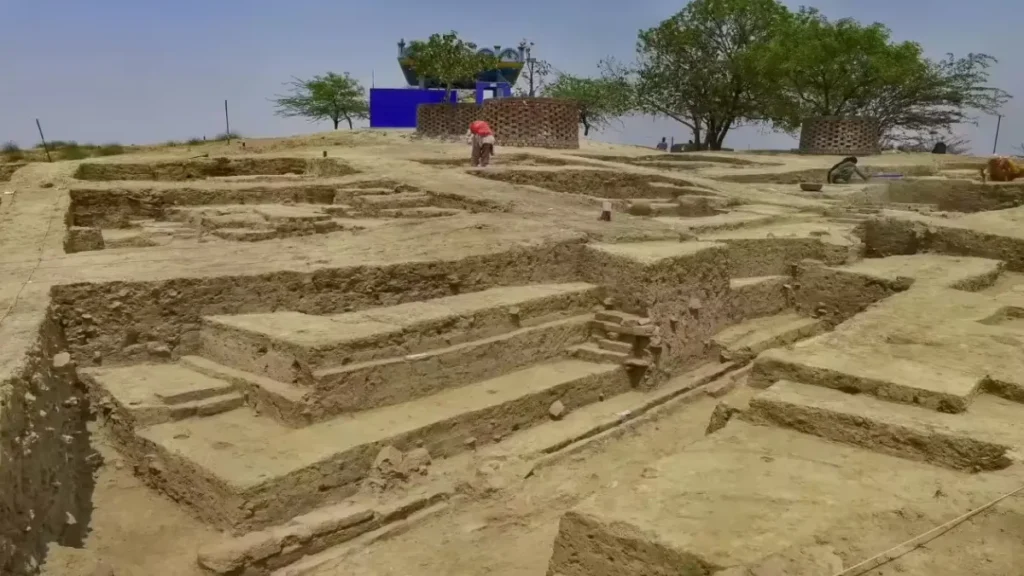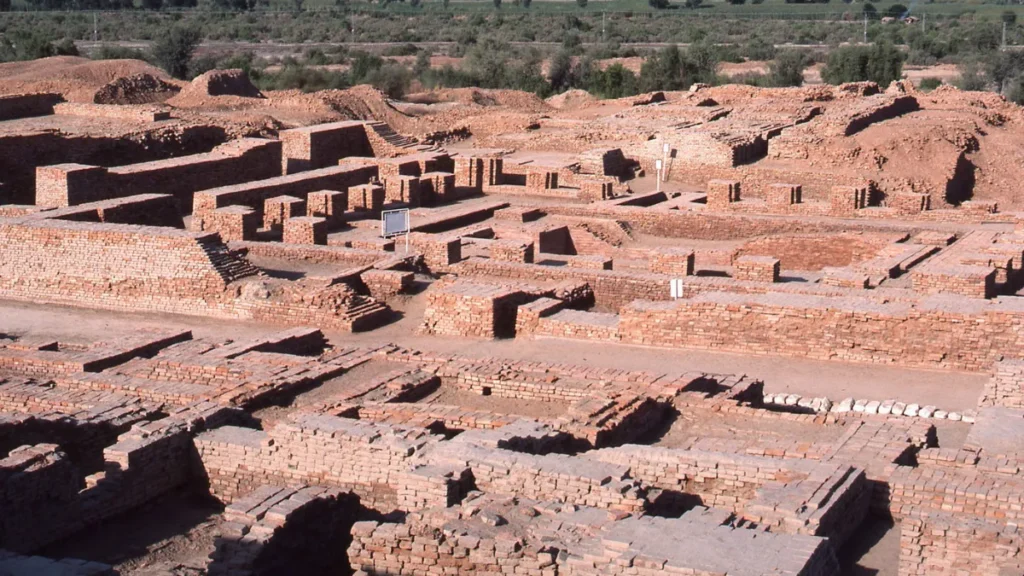
Rakhigarhi site was discovered by archaeologists who later revealed it to be one of the largest and most important cities of the ancient Indus Valley Civilization, offering deep insights into early urban life in the Indian subcontinent.
Introduction to Rakhigarhi
Rakhigarhi is one of the most remarkable archaeological sites in India. Located in the Hisar district of Haryana, this ancient city belongs to the Indus Valley Civilization, also known as the Harappan Civilization. Over the years, Rakhigarhi has gained immense importance because of its massive size, rich findings, and historical relevance.
The discovery of this site has helped historians understand how advanced and well-planned ancient civilizations were thousands of years ago. The question “Rakhigarhi site was discovered by whom” is often asked by students and history enthusiasts, as it marks the beginning of an important chapter in Indian archaeology.
Rakhigarhi Site Was Discovered By Whom
The Rakhigarhi site was discovered by Suraj Bhan, an Indian archaeologist, in 1963. His initial exploration brought attention to the site, but it was only later that detailed excavations revealed its true significance.
After the discovery, extensive excavations were carried out by the Archaeological Survey of India (ASI) under the leadership of well-known archaeologists such as Amarendra Nath. These excavations uncovered several important structures, artifacts, and burial sites that proved Rakhigarhi to be one of the largest Harappan settlements.
The discovery by Suraj Bhan was a turning point because it expanded the known geographical spread of the Indus Valley Civilization. Before this, major sites like Harappa and Mohenjo-daro were primarily associated with present-day Pakistan. Rakhigarhi showed that the civilization was equally widespread in India.
Location and Geography of Rakhigarhi
Rakhigarhi is located in the Hisar district of Haryana, around 150 kilometers northwest of Delhi. The site is spread across several mounds, which are locally known as “dhanis.”
These mounds cover a large area, making Rakhigarhi even bigger than famous sites like Mohenjo-daro. The region is situated near the dried-up Saraswati River, which is believed to have played a crucial role in supporting ancient settlements.
The strategic location of Rakhigarhi helped it grow into a major urban center. The availability of water, fertile land, and trade routes made it an ideal place for settlement.
Importance of Rakhigarhi in the Indus Valley Civilization
Rakhigarhi is considered one of the largest cities of the Indus Valley Civilization. Its importance lies in the fact that it provides evidence of advanced urban planning, trade, and social organization.
The discovery of Rakhigarhi has changed many earlier assumptions about the Harappan Civilization. It shows that the civilization was not limited to a few areas but was spread across a vast region, including parts of modern-day India.
The site also highlights the technological and cultural achievements of ancient people. From well-planned streets to sophisticated drainage systems, Rakhigarhi reflects a highly developed society.
Major Excavations and Findings
Excavations at Rakhigarhi have revealed a wide range of structures and artifacts that provide valuable information about ancient life.
One of the most important discoveries is the well-planned drainage system. The city had proper drainage channels, which were connected to individual houses. This shows that sanitation was given great importance.
Archaeologists have also found brick houses, streets laid out in a grid pattern, and storage areas. These findings indicate that the city was carefully planned and organized.
Artifacts such as pottery, beads, seals, and tools have also been discovered. These items suggest that people in Rakhigarhi were skilled craftsmen and traders.
Burial sites have provided important clues about the social and cultural practices of the people. The way the dead were buried shows that they had specific rituals and beliefs about life and death.
Urban Planning and Architecture
The urban planning of Rakhigarhi is one of its most impressive features. The city was designed in a systematic manner, with streets running in straight lines and intersecting at right angles.
Houses were built using baked bricks and were often multi-room structures. Many houses had courtyards, which were used for daily activities.
The drainage system was highly advanced, with covered drains running along the streets. This ensured cleanliness and proper waste management.
Public structures, such as storage facilities and possibly administrative buildings, indicate that the city had a well-organized governance system.
Daily Life of People in Rakhigarhi
The findings at Rakhigarhi give us a glimpse into the daily life of its inhabitants. People were engaged in various occupations, including agriculture, pottery, bead-making, and trade.
The presence of tools and agricultural implements suggests that farming was an important activity. Crops like wheat and barley were likely grown.
Craftsmanship was highly developed, as seen from the intricate beads and pottery. These items were not only used locally but were also traded with other regions.
The discovery of toys and ornaments indicates that people enjoyed leisure activities and had a sense of aesthetics.
Trade and Economy
Rakhigarhi was an important center of trade in the Indus Valley Civilization. The presence of seals and standardized weights suggests that trade was well-organized.
The city likely had trade connections with other Harappan cities as well as distant regions. Goods such as beads, pottery, and metals were exchanged.
The discovery of materials that were not locally available indicates long-distance trade. This shows that Rakhigarhi was part of a larger economic network.
Cultural and Social Aspects
The cultural life of Rakhigarhi was rich and diverse. The artifacts found at the site reflect a society that valued art, craftsmanship, and organization.
Religious beliefs can be understood from the burial practices and certain symbols found on seals. While the exact nature of their religion is not fully known, it is clear that spirituality played an important role.
Social structure appears to have been well-defined, with different groups engaged in various occupations. The uniformity in housing and city planning suggests a sense of equality and community.
Scientific and Technological Advancements
Rakhigarhi demonstrates the scientific and technological knowledge of the Harappan people. The advanced drainage system and city planning show a deep understanding of engineering.
The use of standardized bricks and weights indicates precision and consistency. This level of standardization is remarkable for such an ancient civilization.
Recent studies, including DNA analysis of human remains, have provided new insights into the genetic history of the people. These studies are helping researchers understand the origins and migration patterns of ancient populations.
Challenges and Preservation
Despite its importance, Rakhigarhi faces several challenges. Urban development, farming activities, and lack of awareness have threatened the preservation of the site.
Efforts are being made by the government and archaeological authorities to protect and conserve the site. There are also plans to develop it as a major tourist destination.
Proper preservation is essential to ensure that future generations can learn from this valuable heritage.
Also Read: Rakhigarhi Museum: Exploring India’s Oldest Civilization Through Timeless Treasures
Why Rakhigarhi Matters Today
The discovery of Rakhigarhi has reshaped our understanding of ancient Indian history. It highlights the advanced nature of early civilizations and their contributions to human development.
Rakhigarhi also plays an important role in education and research. It provides valuable data for archaeologists, historians, and scientists.
For the general public, it serves as a reminder of India’s rich cultural heritage and the achievements of its ancestors.
Also Read: Rakhigarhi: Discover India’s Largest Indus Valley Civilization Site
Conclusion
Rakhigarhi site was discovered by Suraj Bhan, and his discovery opened the door to one of the most important archaeological findings in India. The site has revealed a wealth of information about the Indus Valley Civilization, including its urban planning, trade, culture, and daily life.
Today, Rakhigarhi stands as a symbol of ancient innovation and human progress. Its study continues to provide new insights, making it a vital part of India’s historical and cultural legacy.