What is Rakhigarhi is a question that opens the door to one of the most fascinating chapters of ancient Indian history. Rakhigarhi is the largest known site of the Indus Valley Civilization located in the modern Indian state of Haryana. It is considered one of the most important archaeological discoveries in South Asia, offering deep insights into how people lived over 4,500 years ago.
This ancient city is not just a historical site but a powerful symbol of India’s rich and advanced past. It helps historians understand early urban planning, culture, and human development during one of the world’s earliest civilizations.
What Is Rakhigarhi and Where Is It Located?
To understand what is Rakhigarhi, it is important to know its geographical and historical setting. Rakhigarhi is situated in the Hisar district of Haryana, about 150 kilometers from Delhi. The site spreads across several villages and is larger than other famous Indus Valley sites like Harappa and Mohenjo-daro.
The location of Rakhigarhi was once close to the now-dried Ghaggar River, which is believed by many scholars to be linked with the ancient Saraswati River mentioned in Vedic texts. This river played a crucial role in supporting early settlements and agriculture.
Historical Background of Rakhigarhi
When exploring what is Rakhigarhi, its historical importance stands out. The site dates back to around 2600 BCE, during the mature phase of the Indus Valley Civilization. However, evidence suggests that the area may have been inhabited even earlier.
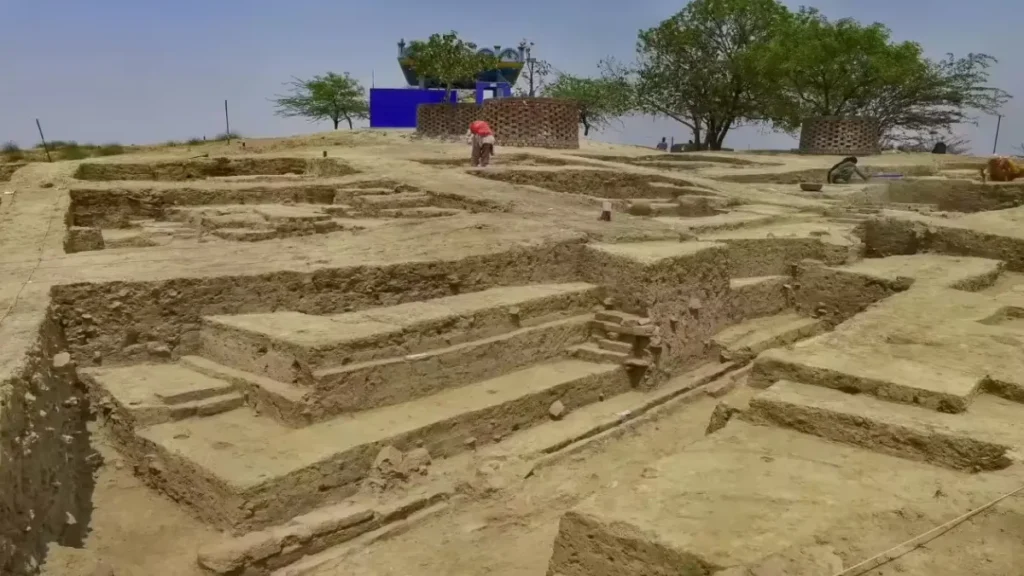
Rakhigarhi remained buried for thousands of years until it was rediscovered in 1963. Later, extensive excavations were carried out by the Archaeological Survey of India, revealing a well-planned urban settlement.
The city flourished during a time when the Indus Valley Civilization was at its peak, known for its advanced architecture, trade systems, and social organization.
Why Rakhigarhi Is So Important
Understanding what is Rakhigarhi becomes even more interesting when we look at its importance in history.
Largest Indus Valley Site in India
Rakhigarhi is the biggest Indus Valley Civilization site found in India, even larger than many well-known sites in Pakistan. This makes it extremely valuable for research and study.
Evidence of Advanced Urban Planning
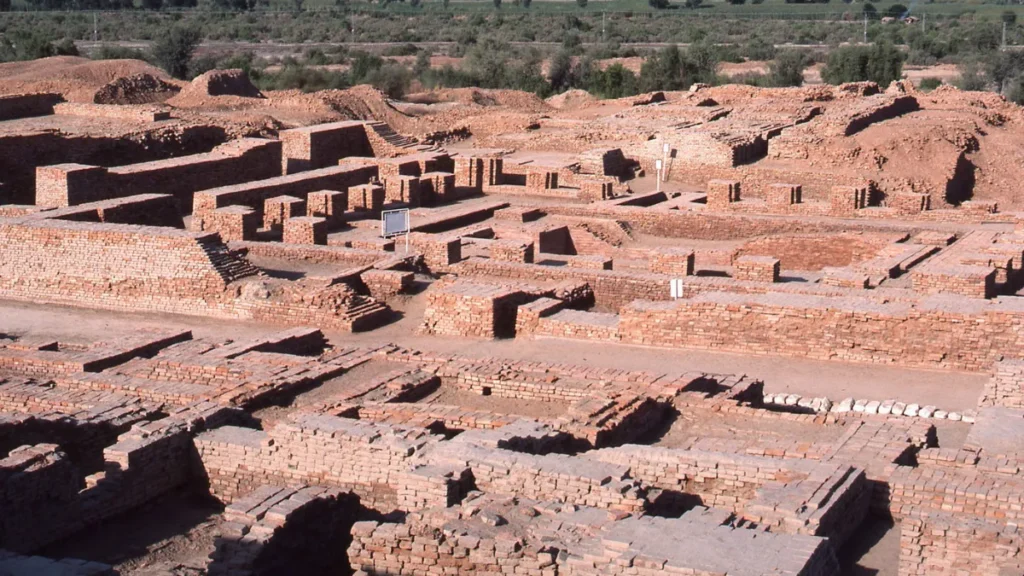
The city was carefully designed with well-laid streets, drainage systems, and residential areas. This shows that people at that time had a deep understanding of engineering and city planning.
Insight into Ancient Lifestyle
Artifacts such as pottery, tools, ornaments, and human remains provide clues about daily life, food habits, clothing, and social structure.
Genetic Research Discoveries
One of the most exciting findings from Rakhigarhi is related to DNA studies. Scientists analyzed human skeletons found at the site and discovered valuable information about ancient human ancestry in South Asia. These findings have helped reshape our understanding of early Indian populations.
What Has Been Discovered at Rakhigarhi
To truly answer what is Rakhigarhi, we must look at the discoveries that have been made there over the years.
Residential Structures
Archaeologists found well-built houses made of mud bricks. These houses had multiple rooms and were connected by narrow lanes. Some even had proper drainage systems, showing a high level of hygiene awareness.
Drainage System
Like other Indus cities, Rakhigarhi had an advanced drainage system. Wastewater was carefully managed through covered drains, which is impressive even by modern standards.
Pottery and Tools
A wide range of pottery items has been discovered, including storage jars, cooking pots, and decorative pieces. Tools made from copper and stone were also found, indicating the use of technology and craftsmanship.
Jewelry and Ornaments
Beads made from semi-precious stones, shells, and metals suggest that people of Rakhigarhi valued beauty and personal adornment. These items also indicate trade connections with distant regions.
Burial Sites
Graves discovered at the site provide important information about burial practices and beliefs. Some graves included pottery and ornaments, suggesting rituals related to the afterlife.
What Is Rakhigarhi’s Role in Understanding the Indus Valley Civilization
Rakhigarhi plays a key role in expanding our knowledge of the Indus Valley Civilization.
A More Complete Picture
Earlier, most major Indus sites were located in present-day Pakistan. Rakhigarhi has helped balance this understanding by showing that the civilization was equally widespread in India.
Cultural Continuity
Some researchers believe that the cultural practices seen in Rakhigarhi have continued in Indian traditions over time. This includes pottery styles, agricultural practices, and settlement patterns.
Trade and Economy
The presence of various materials suggests that Rakhigarhi was part of a larger trade network. Goods were likely exchanged with other regions, including Central Asia and Mesopotamia.
Daily Life in Rakhigarhi
When thinking about what is Rakhigarhi, it is fascinating to imagine how people lived there thousands of years ago.
Food and Agriculture
People mainly depended on agriculture. Crops like wheat, barley, and pulses were commonly grown. Animal husbandry was also practiced, with evidence of domesticated animals like cattle and goats.
Clothing and Fashion
Although textiles rarely survive, impressions on pottery suggest that people wore woven fabrics. Jewelry and ornaments indicate a sense of style and social identity.
Occupations
People were involved in various professions such as farming, pottery-making, metalwork, and trade. This shows a well-organized society with division of labor.
Social Structure
The uniformity in housing suggests that there may not have been extreme social inequality. However, differences in burial items indicate some level of social hierarchy.
Rakhigarhi and Modern Research
In recent years, Rakhigarhi has become a center for advanced research and international collaboration.
DNA Studies
Scientists have conducted genetic studies on skeletons found at the site. These studies have provided insights into ancient migration patterns and the origins of South Asian populations.
Ongoing Excavations
Excavation work continues, and new discoveries are being made regularly. Each finding adds another piece to the puzzle of ancient history.
Tourism Potential
Rakhigarhi has the potential to become a major tourist destination. Efforts are being made to develop it as a heritage site, attracting visitors from around the world.
Challenges in Preserving Rakhigarhi
While learning what is Rakhigarhi is exciting, preserving it is equally important.
Lack of Awareness
Many people are still unaware of the importance of Rakhigarhi. Increasing awareness can help protect the site.
Environmental Factors
Weather conditions and natural erosion can damage ancient structures over time.
Human Activities
Urban development and farming activities near the site pose a threat to its preservation.
Government Initiatives and Future Plans
The Indian government has recognized the importance of Rakhigarhi and is taking steps to preserve and promote it.
Development as a Heritage Site
Plans are in place to develop Rakhigarhi as a world-class heritage and tourism site.
Museum Construction
A museum is being planned to display artifacts found at the site, making it easier for visitors to understand its significance.
International Recognition
Efforts are ongoing to include Rakhigarhi in the UNESCO World Heritage list, which will give it global recognition.
What Is Rakhigarhi’s Significance for India Today
Understanding what is Rakhigarhi is not just about history; it is also about identity and pride.
Rakhigarhi shows that ancient India had highly advanced cities long before many other civilizations. It challenges old assumptions and highlights India’s contribution to global history.
It also inspires modern urban planning by showing how sustainable and organized ancient cities were.
Interesting Facts About Rakhigarhi
Rakhigarhi is full of surprising facts that make it even more fascinating
It is spread across more than 350 hectares, making it one of the largest ancient sites in the world
The site includes multiple mounds, each representing different parts of the ancient city
Evidence suggests that the city had a strong water management system
Some artifacts found here are over 5,000 years old
Rakhigarhi continues to reveal new secrets with ongoing research
Also Read: Rakhigarhi: Discover India’s Largest Indus Valley Civilization Site
Conclusion
What is Rakhigarhi is more than just a question about an archaeological site. It is a journey into the deep past of human civilization. Rakhigarhi stands as a powerful reminder of how advanced and organized ancient societies were.
From its well-planned streets to its rich cultural artifacts, Rakhigarhi offers valuable lessons about history, science, and human development. As research continues, this ancient city will keep revealing new stories, helping us better understand where we come from and how civilizations evolve.
Rakhigarhi is not just a site of ruins; it is a living connection to one of the earliest chapters of human history, and its importance will only grow in the years to come.