Harappan Knowledge Centre Rakhigarhi recently became a place of academic exploration as a group of teachers and research scholars from Haryana Central University and Banaras Hindu University visited the historic site of Rakhigarhi to gain a closer understanding of the Harappan civilisation.
The academic team visited the Sapt Sindhu Harappan Knowledge Centre and explored its museum galleries before travelling across the archaeological mounds of Rakhigarhi. The visit gave the scholars an opportunity to connect their academic studies with the remains and material evidence of one of the most important ancient civilisations of the Indian subcontinent.
The visit was organised as an educational exercise, allowing the researchers to study the archaeological and cultural importance of Rakhigarhi directly at the site. Rakhigarhi is widely recognised for its significance in understanding the Harappan civilisation, and its archaeological remains continue to attract historians, archaeologists and researchers interested in the early urban history of the region.
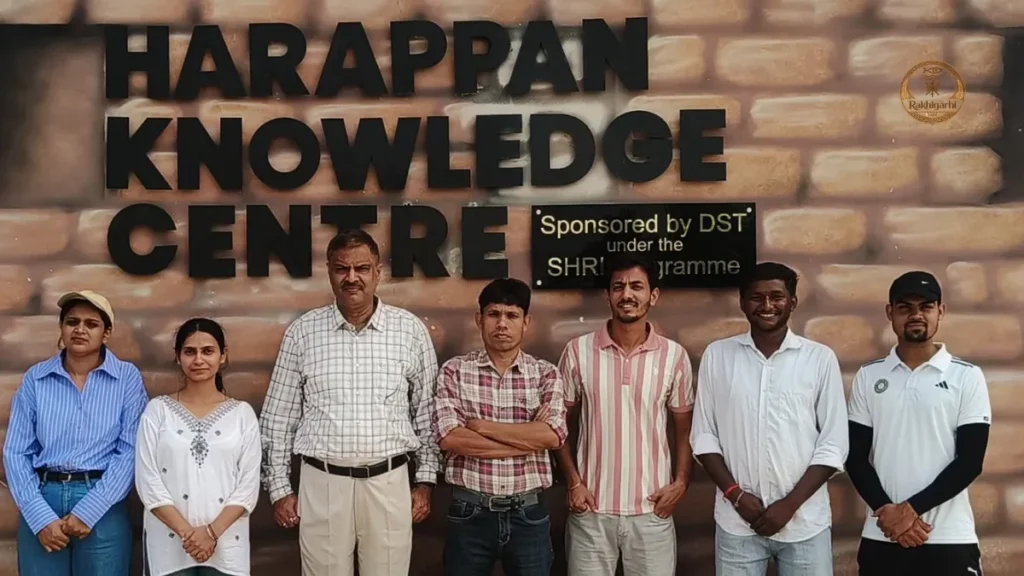
The visiting group included Professor Tirthraj Bhoi, Head of the Department of History and Archaeology at Haryana Central University, Professor Keshav Mishra from the Department of History at Banaras Hindu University, along with PhD scholars Rinku Sharma, Guru Prasad, Namita and Sakshi.
During their visit to the Harappan Knowledge Centre Rakhigarhi, the team examined several galleries operated under the Haryana Sahitya and Sanskriti Academy. The galleries contain material connected with the Harappan period and help visitors understand different aspects of the civilisation through archaeological discoveries and displayed artefacts.
Vikas Kumar, Project Assistant and in-charge of the knowledge centre, briefed the visiting academics about the different galleries and explained the archaeological importance of Rakhigarhi. He also discussed the wider cultural heritage associated with the Harappan civilisation.
The visit also led to discussions on various subjects related to history and archaeology. The exchange of ideas provided an opportunity for the academics and researchers to discuss archaeological evidence, cultural developments and the importance of preserving ancient heritage sites.
Scholars Examine Harappan Artefacts
The academics closely examined a range of objects displayed inside the museum galleries. These included pottery, seals, beads, jewellery and other artefacts associated with the Harappan civilisation.
Each category of artefact provides researchers with valuable clues about the lifestyle, craftsmanship, trade practices and cultural traditions of people who lived in the region thousands of years ago. Examining such objects at a museum alongside the archaeological site can provide a broader understanding of how ancient communities lived and developed.
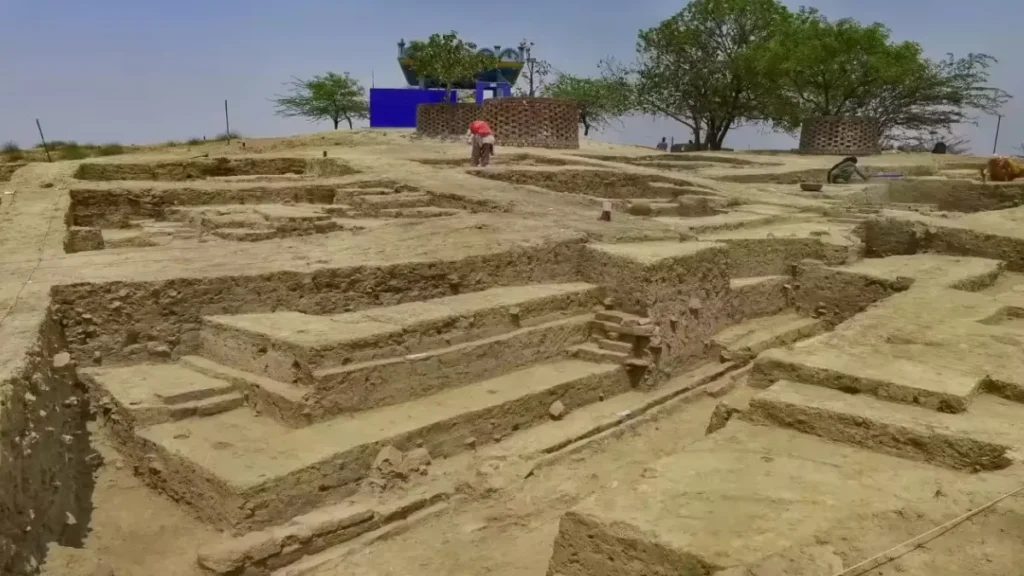
After completing their visit to the museum galleries, the team toured several archaeological mounds at Rakhigarhi. The field visit helped the scholars understand the physical setting of the archaeological site and its historical background beyond what can be learned through books and classroom studies.
Also read: What Is Rakhigarhi? Discover India’s Largest Indus Valley Civilization Site
Importance of the Harappan Knowledge Centre Rakhigarhi
The Sapt Sindhu Harappan Knowledge Centre plays an important role in presenting and preserving information about the Harappan heritage of the region. Its galleries provide students, researchers and general visitors with an opportunity to learn about archaeological discoveries in an accessible setting.
Educational visits such as this also allow research scholars to experience archaeological locations firsthand. Seeing excavation areas, ancient remains and museum collections can add practical understanding to academic research and help connect historical theories with physical evidence.
The Rakhigarhi visit therefore provided the participating scholars with both a museum-based learning experience and an opportunity for field study. By combining the information preserved at the Harappan Knowledge Centre Rakhigarhi with direct observation of the archaeological mounds, the team gained a closer perspective on the historical and cultural significance of Rakhigarhi and its place in the study of the Harappan civilisation.
Also read: Rakhigarhi Discover India’s Largest Indus Valley Civilization Site