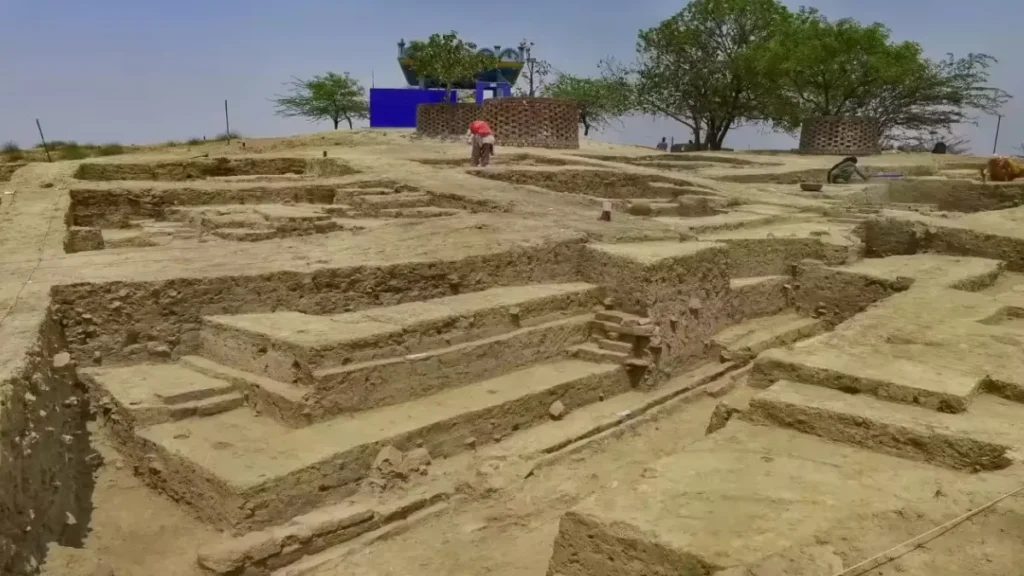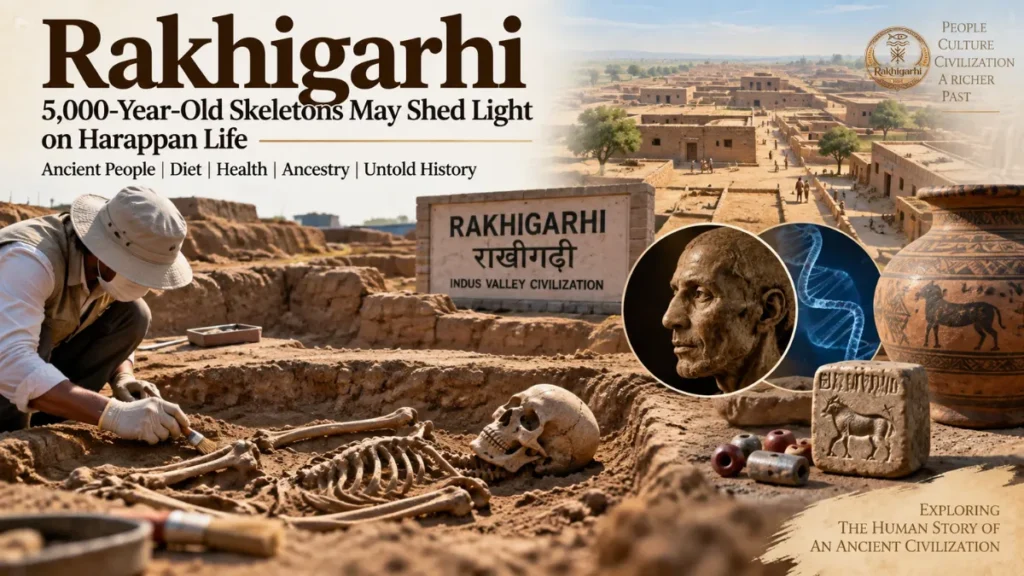
Rakhigarhi is once again drawing attention from archaeologists and scientists as researchers begin a detailed scientific study of human skeletons recovered from the ancient Harappan site. The remains, believed to be around 5,000 years old, could provide valuable clues about how people lived, what they ate, the diseases they may have suffered from and the population history of the Harappan Civilization.
For years, historians and archaeologists have tried to understand the people who lived in the Indus Valley region thousands of years ago. Questions about their physical appearance, diet, health, lifestyle and ancestry have remained subjects of research. The scientific examination of the human remains from Rakhigarhi is expected to add new evidence to this ongoing effort.
The Archaeological Survey of India (ASI) has reportedly sent three human skeletons recovered from the archaeological site to the Anthropological Survey of India (AnSI) in Kolkata for detailed examination.
Scientific Study of Rakhigarhi Skeletons
Scientists will examine the bones and other available biological remains to gather information about the people who lived at Rakhigarhi during the Harappan period. The condition and structure of the bones can provide evidence about an individual’s age, physical development and general health.
Researchers can also study signs preserved in the skeletons that may indicate injuries, nutritional problems or certain diseases. Such evidence can help build a clearer picture of everyday life thousands of years ago.
Diet is another important area of investigation. Scientific analysis of human remains can sometimes provide clues about the types of food consumed by ancient communities. This information can contribute to a better understanding of the lifestyle and environment of the Harappan population.
DNA Analysis Could Provide Ancestry Clues
One of the most significant parts of the research could involve DNA analysis. Scientists hope that genetic evidence, where sufficiently preserved, may help establish relationships between ancient individuals and provide clues about the ancestry of populations living in the region.
DNA research may also help researchers examine connections between ancient populations and investigate possible movements or migrations of people in the distant past. However, the findings will depend on the quality and quantity of genetic material that has survived over thousands of years.
Such research could contribute to the broader scientific discussion surrounding the origins, development and population history of the Harappan Civilization.
Can Scientists Reconstruct Their Faces?
Modern scientific techniques may also allow researchers to create an estimated reconstruction of the facial appearance of some individuals based on their skeletal remains.
A facial reconstruction can offer an idea of what a person may have looked like by examining features of the skull and applying established forensic and anthropological methods. However, such a reconstruction is an estimate rather than an actual photograph or exact representation of the person’s face.
If successful, this work could provide a more tangible connection with the people who lived at Rakhigarhi thousands of years ago.
Also read: Rakhigarhi Project Becomes ASI’s Costliest Ongoing Excavation at Over Rs 2.16 Crore
Why Rakhigarhi Is Important for Harappan History
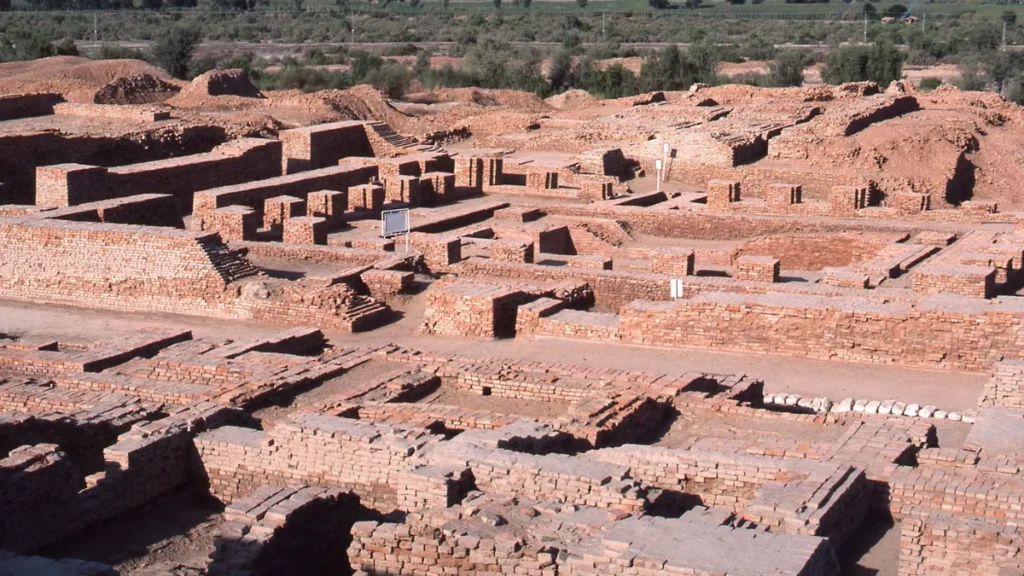
Rakhigarhi is considered one of the largest and most important archaeological sites associated with the Indus Valley or Harappan Civilization. Archaeological discoveries from the site have made it an important source for understanding the development and everyday life of ancient communities in the Indian subcontinent.
Human remains are particularly significant because they can provide information that cannot always be obtained from buildings, pottery, tools or other archaeological objects alone. Skeletons can preserve biological evidence related to health, physical development, diet and, in some cases, population history.
The ongoing scientific study of the three skeletons could therefore add another dimension to archaeological research at the site.
Also read: Rakhigarhi DNA Explained: What Ancient Genetics Really Says About the Aryan Migration Theory
A Closer Look at Life 5,000 Years Ago
The study of the Rakhigarhi human remains is expected to help researchers investigate several long-standing questions about the people of the Harappan Civilization. How healthy were they? What did they eat? What diseases affected them? How did their bodies develop? And what can their genetic history tell us about ancient populations?
The answers may not emerge from a single test, but combining archaeological evidence with anthropology, osteological research and genetic analysis could provide a much clearer picture.
Once the scientific findings become available, researchers may be able to understand the people of Rakhigarhi more closely-not simply as inhabitants of an ancient archaeological site, but as individuals who lived, worked, ate, faced illnesses and built communities around 5,000 years ago.
The research could ultimately add important evidence to the continuing effort to understand the human story behind the Harappan Civilization and the ancient communities that once flourished in the Indian subcontinent.
Also read: Rakhigarhi Harappan Civilization: Tooth Study Reveals Possible Changes in Ancient Food Habits