Rakhigarhi Harappan Civilization: What did people eat thousands of years ago, and how did they prepare their food? Scientists are now turning to an unusual source for answers-ancient human teeth. A recent study of microscopic wear marks found on teeth from two Harappan-era sites in India has offered important clues about differences in food texture and preparation among communities living in different parts of the Indus Valley Civilization.
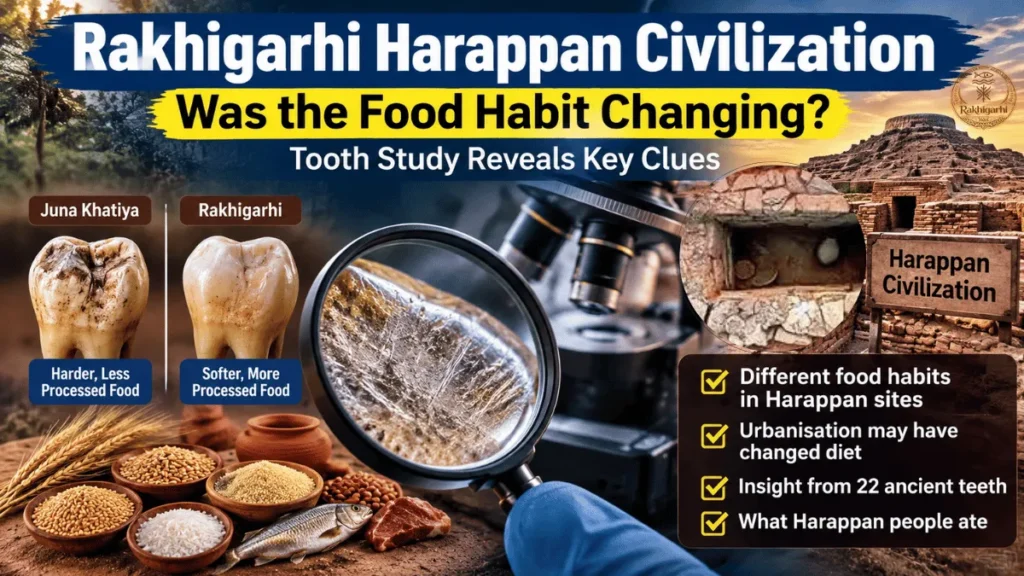
Researchers examined a total of 22 human teeth recovered from Juna Khatiya in Gujarat’s Kutch district and Rakhigarhi in Haryana. Twelve teeth came from Juna Khatiya, while the remaining 10 were recovered from Rakhigarhi. By closely examining tiny patterns of wear preserved on the tooth surfaces, the research team tried to understand what kind of food these ancient communities may have consumed and how heavily that food was processed.
The findings suggest that the way people ate may have changed as Harappan settlements developed and urban centres became more established.
Juna Khatiya Shows Signs of Harder, Less-Processed Food
The teeth from Juna Khatiya are associated with the period between around 3200 BC and 2600 BC. Researchers observed comparatively complex and varied microscopic wear patterns on these teeth.
Such patterns can be associated with food that was relatively hard, coarse or less processed before consumption. The findings suggest that people living at the Kutch site may have regularly eaten food that required more chewing and retained a greater degree of its original texture.
The results from Rakhigarhi presented a different picture. The tooth surfaces examined from the Haryana site showed comparatively less complex wear patterns. Researchers interpreted this as a possible indication that the population consumed food that was softer or had undergone greater processing before it was eaten.
The Rakhigarhi samples belong broadly to the Mature Harappan period, dating from about 2500 BC to 1900 BC.
Did Urbanisation Influence Food Habits?
One of the most interesting possibilities raised by the study is the connection between changing food habits and the growth of settlements.
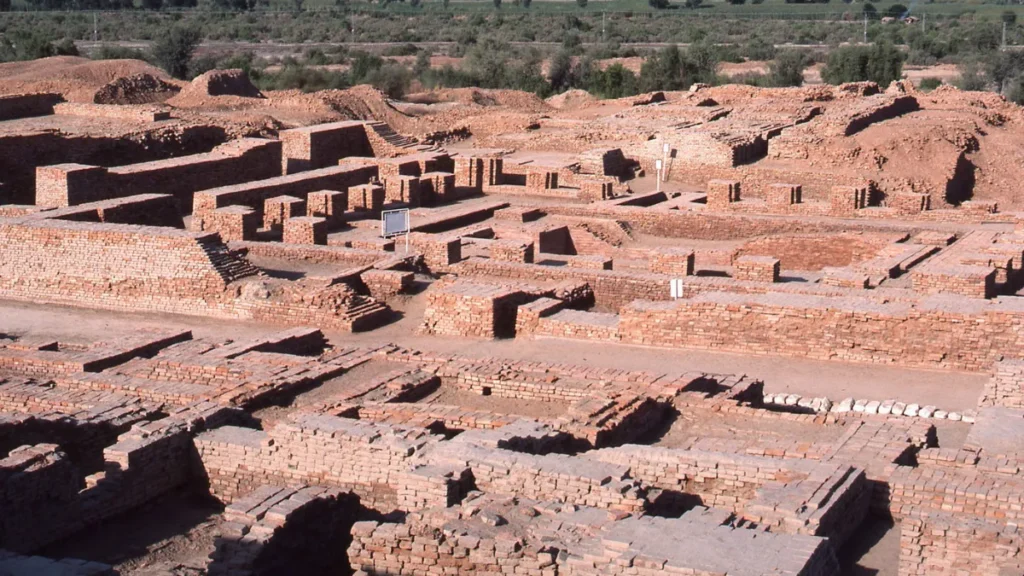
The Harappan Civilization is well known for its organised cities, sophisticated drainage systems, trade networks and specialised crafts. As settlements expanded and populations became more concentrated, the systems used to produce, process and distribute food may also have become increasingly organised.
In larger settlements, people could have had greater access to processed food, while specialised occupations and a more developed division of labour may have changed how food reached households and how it was prepared.
However, researchers have not treated this explanation as a final conclusion. The number of teeth examined in the study is relatively small, and much more archaeological evidence will be required before scientists can establish a broader pattern across the Harappan world.
What Did Harappan People Eat?
Archaeological evidence indicates that Harappan communities had access to a wide variety of plant and animal foods. Their diet included cereals and pulses, with crops such as millets, wheat, barley and rice forming part of the wider food system.
Animal products were also important. Harappan communities consumed domesticated animals and appear to have used animals obtained through hunting as well. Fish and other aquatic resources were also available to populations living near suitable water sources.
This suggests that the Harappan diet was not based on a single crop or food source. Instead, different communities appear to have relied on a diverse combination of cultivated plants, livestock, wild animals and aquatic resources.
Juna Khatiya and Rakhigarhi: What Was Different?
| Feature | Juna Khatiya, Kutch | Rakhigarhi, Haryana |
|---|---|---|
| Teeth studied | 12 | 10 |
| Approximate period | 3200–2600 BC | 2500–1900 BC |
| Tooth wear | More complex and varied | Comparatively less complex |
| Possible food indication | Harder and less processed | Softer and more processed |
| Possible broader influence | Smaller or less urbanised setting | Growing urbanisation and food processing |
The contrast does not necessarily mean that everyone at one site ate exactly the same type of food. Instead, the results point towards possible differences in food preparation, texture and consumption practices between communities and periods.
How Can Teeth Reveal Ancient Diets?
Human teeth are remarkably useful archaeological evidence because they preserve traces of everyday activity.
Every time food is chewed, its hardness, texture and the particles it contains can affect the surface of the teeth. Over years, repeated chewing can leave microscopic patterns known as dental microwear.
Modern scientific methods allow researchers to examine these tiny marks in considerable detail. By comparing the complexity, orientation and characteristics of wear patterns, scientists can develop clues about the type of food consumed and whether it was relatively hard, soft, coarse or heavily processed.
The same approach was applied to the ancient teeth from Juna Khatiya and Rakhigarhi. The differences observed between the two groups provide a new line of evidence for understanding how food practices may have varied across the Harappan cultural landscape.
Was Rakhigarhi’s Urban Lifestyle Linked to Softer Food?
The researchers believe urban development could be one possible explanation for the difference.
As large population centres emerged during the Mature Harappan period, food preparation may have become more sophisticated. Grain could have been ground, ingredients could have been processed more extensively, and cooking methods may have changed as communities became more settled and specialised.
Smaller or less urbanised communities may have continued to consume foods that were comparatively coarse or less processed. In contrast, residents of major urban centres such as Rakhigarhi may have had greater access to foods that went through additional preparation before reaching the dining table.
Still, this remains a hypothesis rather than a proven fact. Other factors, including local food availability, cultural preferences, occupation, age and differences in food preparation, could also have influenced dental wear.
Why the Study Matters for Harappan History
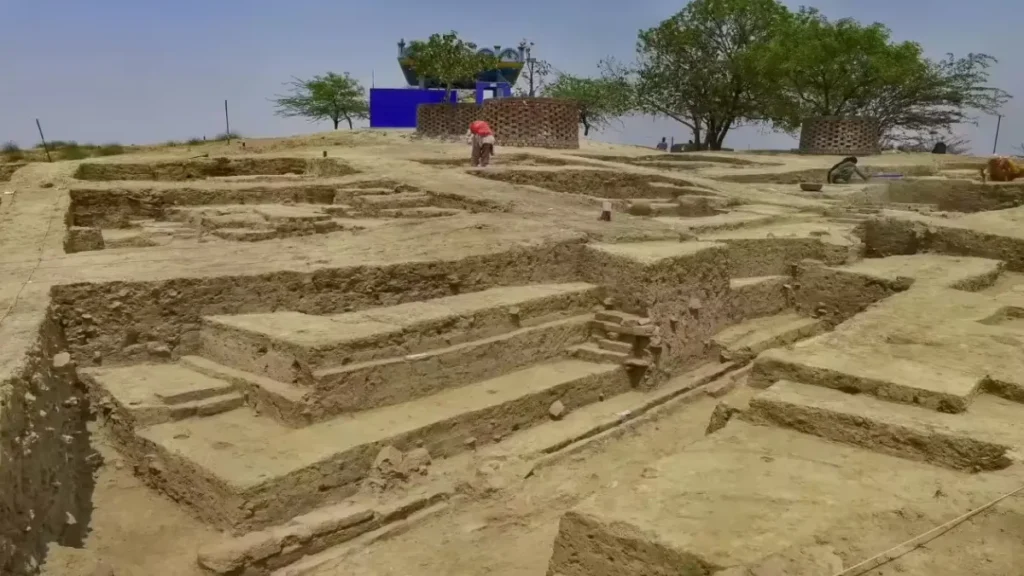
Rakhigarhi is among the most important archaeological sites associated with the Harappan Civilization, and evidence from the site continues to help researchers understand everyday life during one of South Asia’s earliest urban traditions.
Much of the popular understanding of the Harappan Civilization focuses on city planning, architecture, trade, craft production and drainage systems. Yet food is equally important for understanding how ordinary people lived.
The new findings suggest that communities belonging to the same broad civilisation may not have followed identical lifestyles. Food habits could differ according to location, period, access to resources and the degree of urban development.
The study therefore adds another dimension to the understanding of Harappan society. Instead of relying only on pottery, plant remains, animal bones or other archaeological materials, researchers can also examine human teeth to investigate daily dietary practices.
More Evidence Will Be Needed
The researchers emphasise that the current findings should be viewed as an early step rather than a final answer about Harappan food habits.
Only 22 teeth were examined, representing two archaeological sites. A much larger collection of human remains from Gujarat, Haryana and other Harappan settlements would allow scientists to determine whether similar dental wear patterns appear across different regions and periods.
Future research combining dental microwear with plant remains, animal bones, pottery evidence and other archaeological data could provide a much clearer picture of what people ate and how their food was prepared.
If similar patterns are identified in larger samples, scientists may be able to better understand whether urbanisation, occupational specialisation and changing food-processing practices played a significant role in shaping the diets of Harappan communities.
The study also highlights how much information can remain hidden in human remains thousands of years after a civilisation disappears. Ancient teeth are not simply biological remains. Under modern scientific examination, they can preserve traces of everyday meals and offer valuable clues about changing lifestyles.
For Rakhigarhi and the wider Harappan Civilization, such evidence could help researchers move beyond monuments and city layouts to understand the ordinary routines of the people who lived there-including something as fundamental as what they ate and how they prepared their food.